
Kane County Inmate Population Lookup
Kane County inmate population searches work best when you start with the county jail rules instead of a broad web search. The county uses a narrow mail process, a tight visitation schedule, and VINELink as the first public custody check. That means the county does not want people guessing at the process. It wants them to follow the local rules, confirm a name through a trusted custody tool, and then move to the jail or court side only when needed. If you know where the mail goes and when visits happen, the rest of the search gets easier fast. Kane County keeps the public path clear, but it is not broad.
Kane County Inmate Population Basics
The Kane County homepage at kane.utah.gov is the county's front door, and it is the source for the image below. The jail and sheriff services sit inside that county network, so the homepage gives the right starting point before you move to a custody tool or a mail rule. Kane County also keeps a jail page that explains the basic jail role in the criminal justice process. That matters because the county wants the public to understand the jail as an active office, not just a list of names.
Kane County's inmate information page at kane.utah.gov/301/Inmate-Information is where the real work begins. It explains that personal mail is not sent directly to the jail. Instead, it goes to P.O. Box 247 in Phoenix, Maryland, where it is screened, scanned, and then made available to inmates electronically. That is a very specific process, and it is one of the biggest reasons Kane County inmate population questions need a county page instead of a third-party summary. If you mail the wrong place, you lose time.
The same page also tells you that legal correspondence can still go to the jail at 971 E Kaneplex Drive in Kanab. That split between personal mail and legal mail is important. It shows Kane County is separating regular contact from attorney or court mail. For an inmate population check, that means the first question is not just who is in custody. It is also how the county wants you to reach them once the name is confirmed.
The Kane County homepage at kane.utah.gov is the source for the image below and the best county base for an inmate population search because it keeps the jail and sheriff work tied to the county itself.
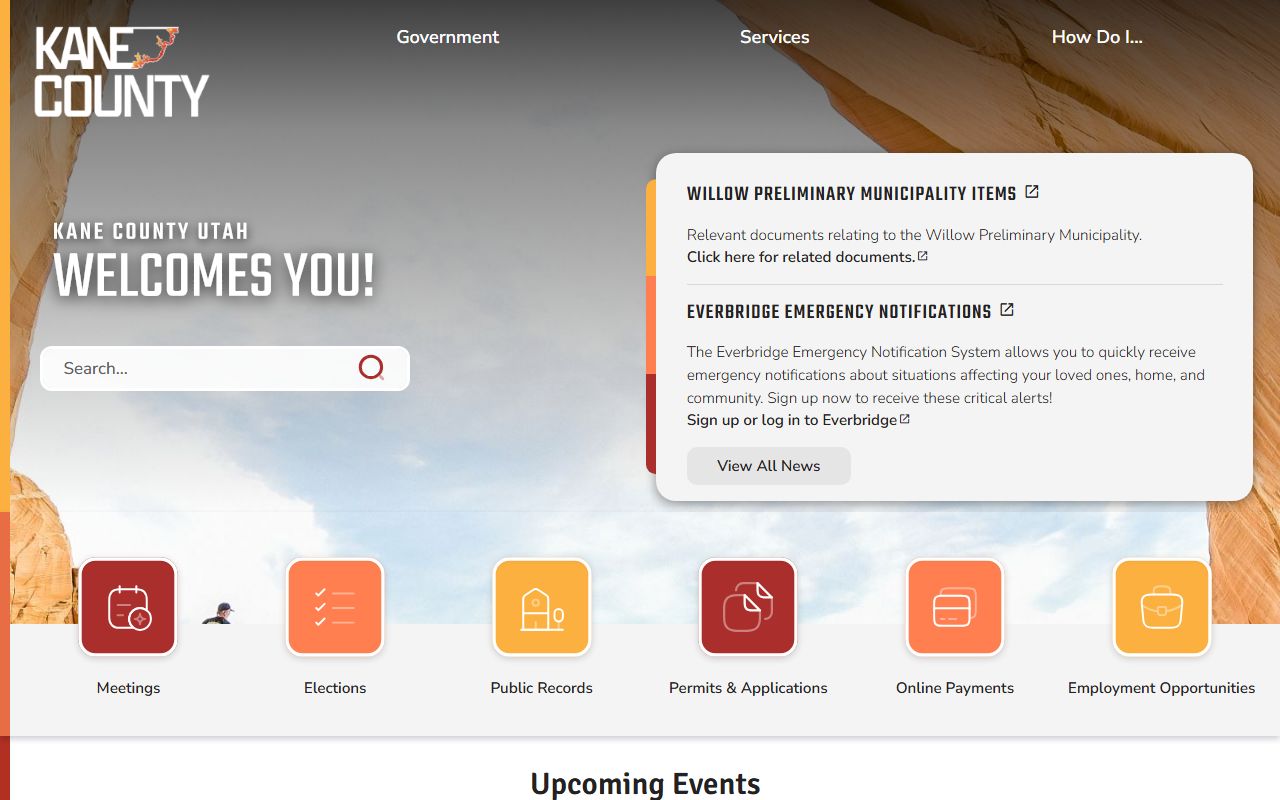
The county homepage image shows the official Kane County starting point. It is the right local entry when you want to move from a name to the county system.
Kane County Mail And Visits
Kane County keeps personal mail and visits on a narrow track. Personal mail goes to the Phoenix, Maryland processing address, and that is a key detail because it tells families not to send routine letters to the jail door. The county says the mail is screened, scanned, and delivered electronically. That is a strong signal that the jail wants the mail path kept clean and standard. It also means a delayed or missing letter may be a process issue, not a custody issue.
Visitation is limited too. The public jail page shows a narrow schedule, and the practical takeaway is that Wednesday and Saturday are the main public visit windows people tend to work around. Visits are by approval, and the jail asks visitors to apply first and stay on the approved list. That keeps the flow controlled. It also means a family cannot treat Kane County inmate population records like a loose open-hours counter. The jail wants planned contact, not walk-in traffic.
The inmate information page also notes that visiting is a privilege, not a right, and that packages are restricted. Those rules matter because they help explain the county's broader approach. Kane County is not hiding the inmate population. It is controlling how the public interacts with it. For people trying to check a booking or support someone inside, those limits are part of the search story, not a side note.
Kane County's jail rules make the search more predictable. Once you know the mail route and the visit rhythm, you can act with less guesswork and fewer delays.
VINELink at vinelink.com is the source for the status-tracking image below, and it matches Kane County's practice of using alert-based custody checks alongside the local jail rules.
The VINELink image gives Kane County a strong state-backed custody tool. It fits the page because VINELink is one of the primary ways to check a current status change.
Kane County VINELink Search
Kane County points people toward VINELink because that is the cleanest public custody check when you need a fast answer. The county sheriff page at kane.utah.gov/193/Sheriff includes a link to the victim information network, and that matters because it puts the search in a trusted state system. VINELink is not a county roster. It is better for status updates. If a person moved, got released, or transferred, the alert system is more useful than a one-time web search.
The sheriff page also connects the public to the wider law enforcement system. That is important in Kane County because the county wants the public to use the office that actually handles the jail, not a third-party index that may lag behind. The county's contact structure at the sheriff office gives you the local answer, while VINELink gives you a wider check. Together, they cover the most common inmate population questions without making the public work harder than it needs to.
The state offender search at corrections.utah.gov/offender-search/ is the best backup when a Kane County search needs a second look outside the jail. It covers current Utah Department of Corrections jurisdiction only, so it is useful when a person may have moved beyond county custody. That does not replace VINELink. It works with it. If VINELink is the alert tool, the offender search is the plain current-custody check. That combination is strong enough for most Kane County inmate population questions.
The Utah Department of Corrections offender search at corrections.utah.gov/offender-search/ is the source for the state backup image below and the safest second check after VINELink.
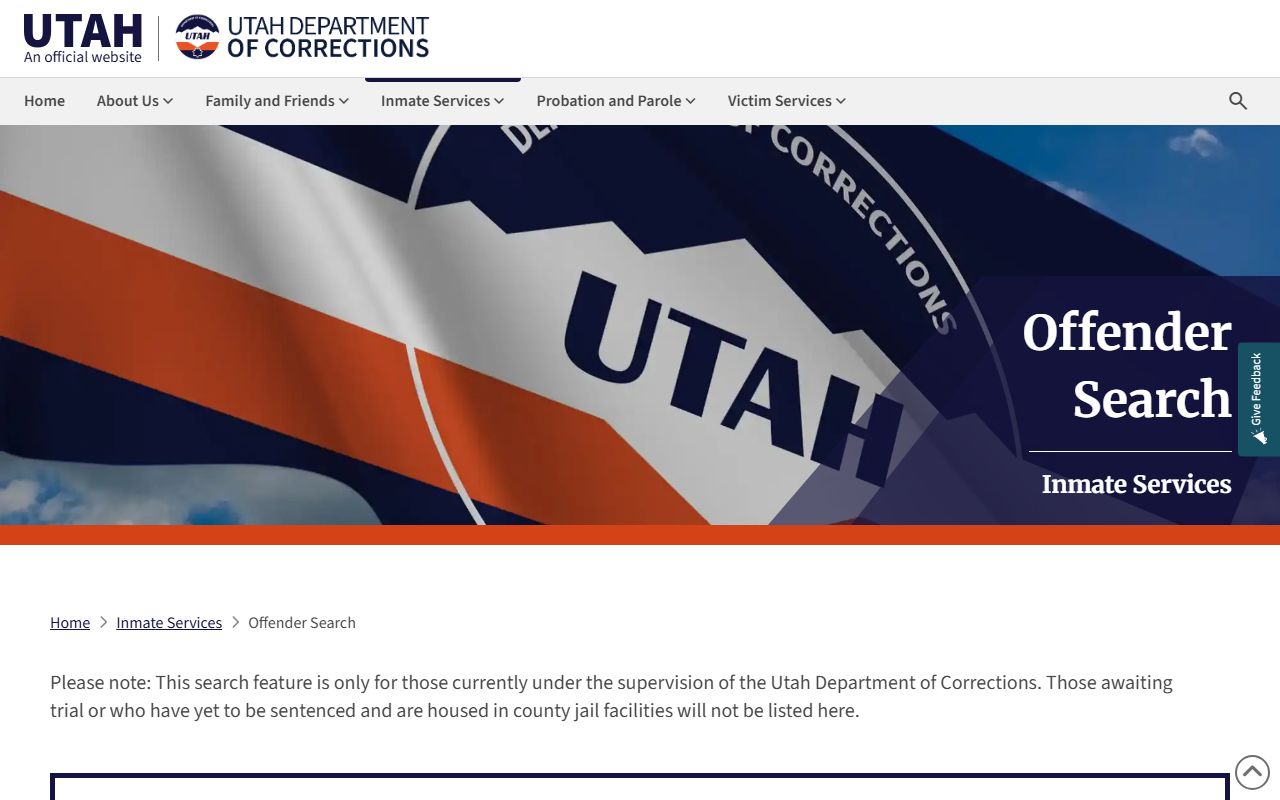
The offender search image supports the Kane County page as a state fallback. It helps when the jail answer is no longer the whole story.
Kane County Courts And Records
Once a Kane County booking turns into a court matter, the Utah court system becomes the right next step. The official Utah courts site gives the structure behind district court work. That matters because an inmate population search is often only the start. A booking can quickly become a court file, a bail issue, or a pretrial case. The court pages make that transition easier to read.
For records work, the GRAMA statute at Utah Code Title 63G, Chapter 2 is the legal frame. Kane County uses a fillable GRAMA request form, and the sheriff office even publishes a fillable version in its document center. That means the county expects written requests for more detailed jail records, not just casual phone calls. If you need the record trail behind a custody answer, that law is the starting point. It is also the cleanest way to ask for something the public page does not show.
Records and custody also connect through the Bureau of Criminal Identification. That office is not a jail roster, but it helps when an inmate population check turns into a criminal history or identity question. Kane County's public system uses a few different doors for a reason. The jail page handles local custody, the court pages handle the legal lane, and BCI handles state-level criminal history. That split is useful when you need more than a name.
In Kane County, the best search flow is simple. Start with the jail page, use VINELink, then move to Utah Courts or GRAMA only when the record needs more detail.
The Utah courts site at utcourts.gov is the source for the court image below, and it fits the county page because local custody often turns into a court matter next.
The Utah State Courts image gives Kane County a court-side fallback. It helps when the inmate population question moves from jail access to case tracking.
Nearby County Links
Kane County sits near other Utah counties where custody questions can cross a line quickly. These internal links keep the search in the same county set and make it easier to compare local jail rules when a name is common or a transfer is possible.
If a custody question moves across county lines, those pages are the next official place to compare the booking path.