
Search Rich County Inmate Population
Rich County inmate population research is a thin-page search, so the county homepage matters more than usual. The public record path starts in Randolph, where the jail is located, and the local phone line gives you the fastest way to reach the county office when a web page does not answer the question. Rich County also leans hard on VINELink as the primary search method, which is useful when you need a custody update more than a long roster history. That combination keeps the search local first and state-supported second. It is the cleanest way to work a small-county inmate population check without guessing at third-party results.
Rich County Inmate Population Basics
The official county homepage is the main local source for Rich County inmate population research. The sheriff and jail manifest URLs failed, so the county homepage becomes the best county-level starting point available here. That fits Rich County well. The county is small, the public site is limited, and the jail location in Randolph is the local fact that anchors everything else. When the page is thin, the answer is to keep the search tied to the county office that still exists and to use Utah state tools when the county page runs out.
Randolph is the jail location in the research, and the county phone is (435) 793-2285. That gives you a live local contact even if there is no separate sheriff or jail page to open. For a county like Rich, the phone line matters because it can confirm whether a person is still in the local system, whether a booking moved, or whether you need to switch to a state lookup. The county homepage also keeps the search local in a way that third-party pages do not. It is not flashy, but it is official and direct.
The county homepage at richcountyut.org is the source for the image below and the best visual anchor for Rich County inmate population research because it is the only live county page in the manifest set.
The county homepage at richcountyut.org gives Rich County a real government entry point for inmate population questions, even when the sheriff and jail pages do not resolve.

The homepage image keeps the Rich County search grounded in the local government site. It is the right county-level fallback when the live jail path is not available.
Rich County Inmate Population and VINELink
VINELink is the primary search method in the Rich County research, and that tells you a lot about how the county expects the public to check custody. A small county often depends on a notification tool more than a long public roster. VINELink at vinelink.com is a free, confidential way to track custody status changes, so it is a practical match for a county with thin local pages. If you are watching for a release, transfer, or new booking, VINELink is the official state-supported route that does the most work for you.
That does not make the state offender search unnecessary. The Utah Department of Corrections offender search at corrections.utah.gov/offender-search/ is the best current custody backup when you need to know whether a person moved into state jurisdiction. The county page is local, but the state search can close the loop if the person is no longer in Randolph custody. The two tools work well together. One is a notification layer. The other is a current custody layer. For Rich County inmate population research, that split is useful and easy to remember.
The VINELink page at vinelink.com is the source for the image below and the strongest backup when a Rich County inmate population check needs a status alert instead of just a one-time search.
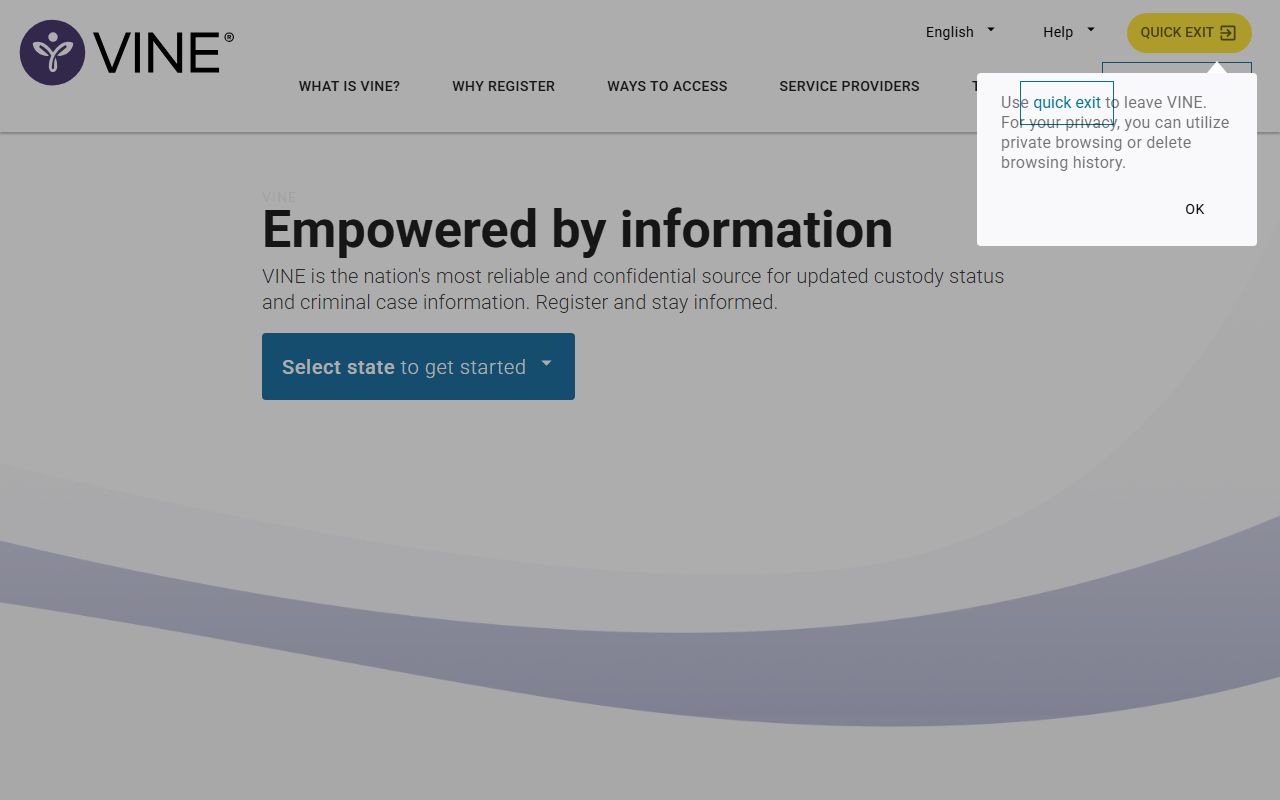
The VINELink image supports the Rich County page because the county itself points the public toward that kind of custody tracking. It is the right state fallback for a small county search.
Rich County Inmate Population Records
When a Rich County inmate population question turns into a records question, GRAMA is the right law to use. Utah's public records statute at Utah Code Title 63G, Chapter 2 governs request rights, record classifications, and response timing. That matters because a local jail contact is not the same thing as a records request. If you need a formal file, a copy, or a record that is not visible on the county homepage, GRAMA is the path that keeps the request official and traceable. The county page is helpful, but it is not a records office by itself.
The Utah courts system also belongs in the search chain. The main courts site at utcourts.gov and the district courts page at utcourts.gov/en/courts/district-courts.html help when a booking has a case number, a hearing date, or a court step attached to it. Rich County inmate population research can feel simple at first, but the court side matters once custody and criminal process begin to overlap. The court pages keep that part of the trail official.
For broader criminal history work, BCI at bci.utah.gov is the correct Utah office. It is not a jail roster, but it is the state repository for criminal history and background check work. If you need to confirm identity, a warrant issue, or a records trail beyond Randolph, BCI is the right government source to use. That keeps the Rich County search inside high-authority pages from start to finish.
Note: Rich County pages are limited, so the safest search path is county homepage first, then VINELink and the Utah state record tools.
The BCI page at bci.utah.gov is the source for the image below and the correct state backup when a Rich County inmate population question becomes a criminal history question.
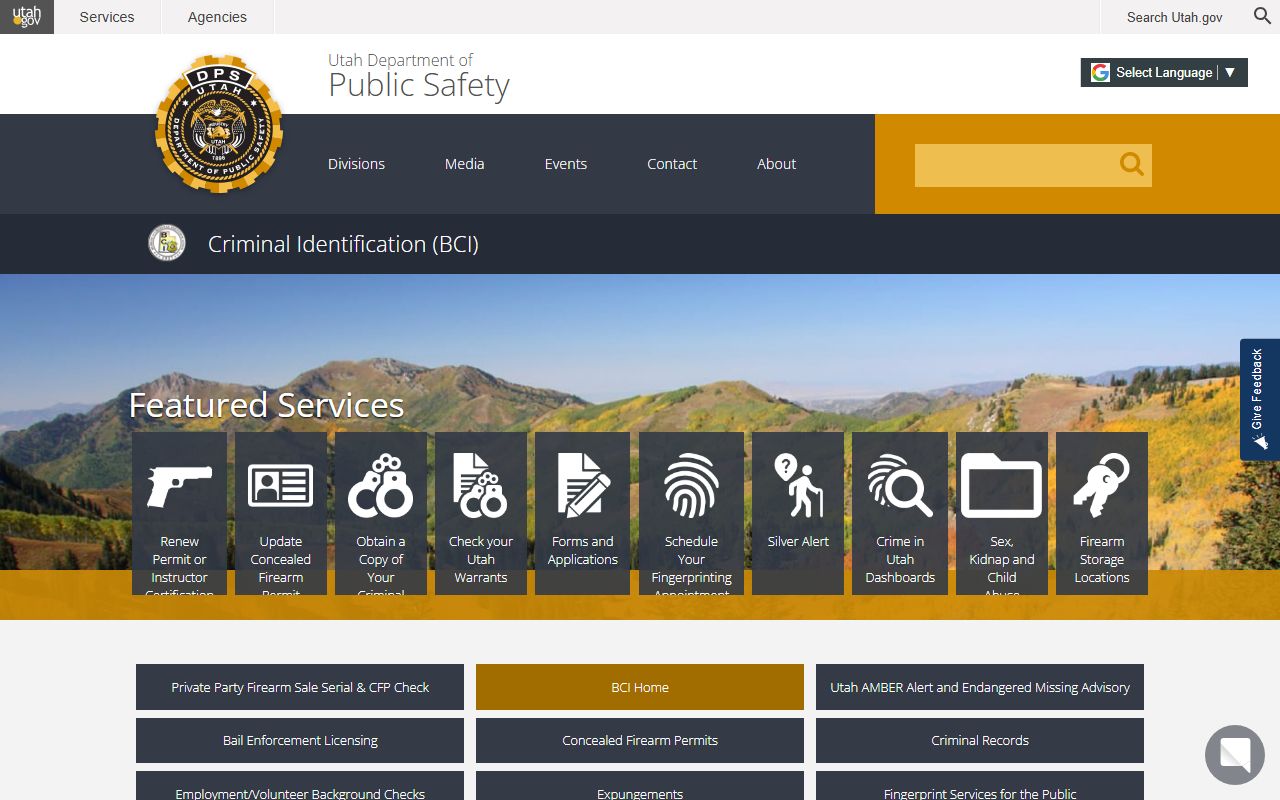
The BCI image gives Rich County a final state fallback. It fits the page because identity, history, and custody often overlap in a small county search.
Nearby County Links
Rich County sits in the far north of Utah, so a second county check can matter when a booking moved, a name is common, or the person may have crossed into another local jail system.
Those active county pages give you a quick comparison set if the Rich County inmate population record does not resolve at the first stop.