
Search Salt Lake County Inmate Population
Salt Lake County inmate population records help you find who is booked, where a person is held, and how to reach the right jail office. The county runs two correctional facilities, Metro Jail and Oxbow, and the sheriff office keeps a public lookup tool for current jail information. If you need a fast check, start with the county sheriff page, then move to the find-a-prisoner search or the jail rosters when you need a fuller view of the inmate population in Salt Lake County. The office also posts contact details, request guidance, and local record rules that matter when you need a name, a booking number, or a recent docket entry.
Salt Lake County Inmate Population Basics
The main Salt Lake County sheriff page at saltlakecounty.gov/sheriff is the best place to begin. It points to the corrections division and gives a clear path to inmate population tools. Sheriff Rosie Rivera oversees the office, and the county says the jail system has more than 2,500 beds spread across the two facilities. That scale matters. It tells you why the county keeps both a prisoner search page and a roster page. The contact page also lists office and jail phone numbers, so you can call the right desk without guessing.
The county sheriff office hours are Monday through Friday, 8 a.m. to 5 p.m. The jail phone line is (385) 468-8400, the records request line is (385) 468-8870, and the sheriff administration line is (385) 468-9709. Those numbers are useful when online lookup is not enough. They also help when you need to check whether a booking is fresh, whether a person has moved between Metro Jail and Oxbow, or whether a docket entry is still within the county's public window. Salt Lake County keeps the system plain and direct, which is useful when time is short.
The county also offers a direct online lookup at iml.slsheriff.org/IML. That tool is the quickest way to search the current Salt Lake County inmate population by first name, last name, booking number, or permanent number. If you already have a number, use it. If not, use the full name and narrow the result by date or status. The county makes the search easy enough for the public, but the result still depends on the booking being entered and updated in the system.
The official Salt Lake County sheriff home page at slco.org/sheriff provides another county entry point. It is useful when a user knows the county but not the direct corrections path. That page helps anchor the larger sheriff office site and keeps the inmate population lookup tied to a real county office, not a third-party database.
The sheriff office page at saltlakecounty.gov/sheriff and the alternative county page at slco.org/sheriff show the same local authority from two county domains. Use either one to confirm you are on the right Salt Lake County inmate population resource before you search.
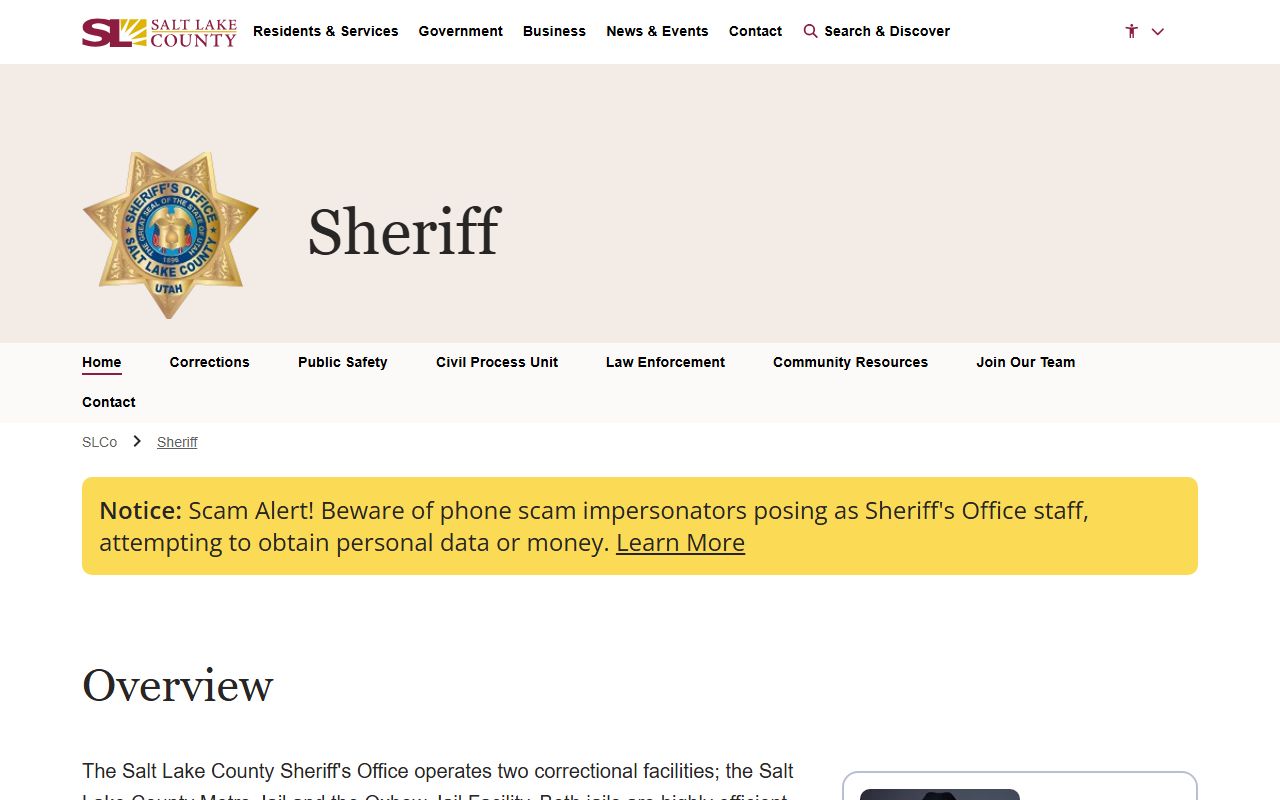
The main sheriff page gives a clean path to the inmate population tools and contact links. It is the best first stop when you need a county-level view.
Salt Lake County Jail Search Tools
The county search page at saltlakecounty.gov/sheriff/corrections/find is the place to find a prisoner by name or number. Salt Lake County says the lookup supports first and last name, booking number, and permanent number. That helps when you have only part of a case file or a phone message with a booking reference. The search is built for the public. It is not fancy, but it gets the job done fast. If you need a current booking, use the find page before you call the jail.
The county roster page at saltlakecounty.gov/sheriff/corrections/rosters gives jail docket access for the past 60 days. That window is useful when you need to check recent custody history or compare a name against older bookings. It is also the best public view of a short recent range of Salt Lake County inmate population records. For many users, the roster page is the step that shows whether a name is still active in the jail system or has moved out of the county's current hold list.
When you open the roster page, use the data to sort out the person you want before you make a phone call. Recent dockets can show more than one person with a similar name. The county search tools are strongest when you use a booking number, a permanent number, or a clear full name. That is especially true in a county this large, where the inmate population can shift fast and the same name can appear more than once over a 60-day span.
The lookup tools also help if you are checking a transfer between the two Salt Lake County facilities. The county's booking and roster pages point you toward the right hold location before you ask for the next step.
The find-a-prisoner page is the fastest public search tool for the current Salt Lake County inmate population. It is the right choice when you need a name match or booking reference.
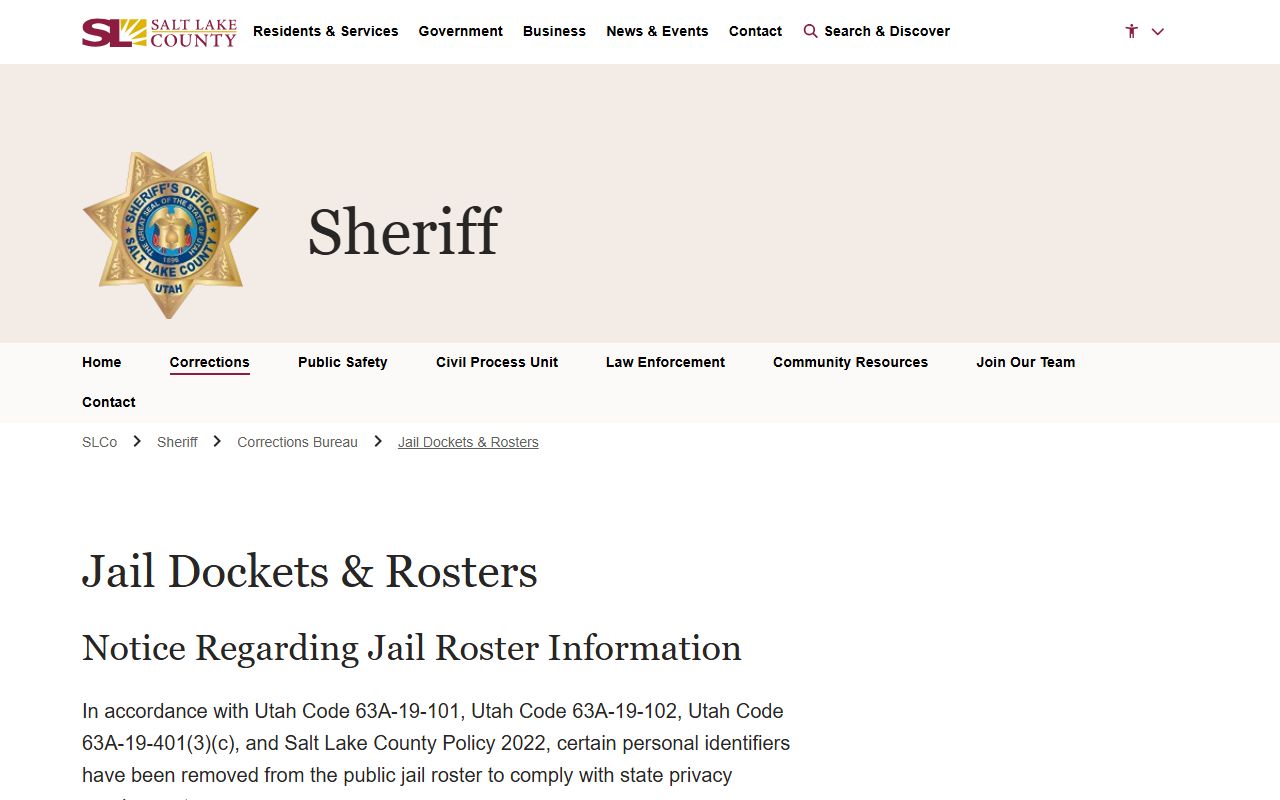
The docket page covers the recent 60-day window and helps you trace a short custody path without needing a clerk counter visit. It works well with the inmate search tool above it.
Salt Lake County Facilities
Salt Lake County runs two correctional facilities, Metro Jail and Oxbow. That detail matters because the inmate population is split across two sites, not one. When a booking is new, the person may be processed at one location and then moved later. The county's public tools are meant to help you see that split without guessing. Metro Jail is the main name most people know, while Oxbow serves as the other county jail site. Together, the two facilities account for the county's large jail bed count and its busy daily intake flow.
The Salt Lake County sheriff office uses the corrections pages to keep the public informed about where to look and what to ask for. If you are trying to confirm a place of hold, use the search page first, then use the contact page if the result is unclear. Because the county is large, a call to the jail line can save time when a person has been transferred or when a booking is not yet reflected in the public view.
Salt Lake County also makes room for more than just names and dates. A booking can show enough detail to tell you whether you should expect a jail move, a release update, or a longer hold. That is why the county keeps both the current search and the docket archive open to the public. The two tools work together and give the inmate population page real use for families, attorneys, and anyone checking a recent booking.
The alternative sheriff domain is another official Salt Lake County route to the same jail information. It is useful when one county link is easier to open than another.
Salt Lake County Records Requests
Salt Lake County's public records page at saltlakecounty.gov/records-management/public-records-requests-grama explains how to file a GRAMA request. The county says it responds in 10 business days, or 5 business days for media requests. The first 30 minutes are free, then the county charges $25 per hour. Paper copies cost up to 50 cents per page, and certified copies cost $10 plus any statutory fee. If the estimated cost is more than $50, the county may ask for prepayment before it starts the work. Those rules matter when a search result is not enough and you need a paper copy or a certified record.
Use the records request line at (385) 468-8870 when you need help with the request process. The staff can tell you whether the record is already public, whether the county needs more detail, or whether the cost estimate will trigger a prepayment notice. For Salt Lake County inmate population records, this is the path to use when a booking page, roster page, or phone call does not answer the question.
The GRAMA page is also where the county explains its public record limits. That matters because inmate population records can include both open data and details that take more time to gather. If you need a copy of a jail docket, a booking sheet, or another county-held record, the GRAMA route makes the request official and gives you a traceable paper trail.
When you ask for records, be clear about the exact date range, name, and type of document. The county can move faster when it knows whether you want a docket page, a booking report, or a larger inmate population file. Good detail cuts down on back-and-forth and keeps the request focused.
Note: Salt Lake County's fee rules can change, so confirm the current cost before you submit a large records request.
The GRAMA page and the contact desk work well together. Use the public rules page for the formal request and the phone line when you need a human answer before you file.
Salt Lake County Inmate Communication
Salt Lake County also publishes useful detail about prisoner communication. OffenderConnect email messages cost $0.50 per message, and phone access runs from 7 a.m. to 9:30 p.m. That is helpful when you are tracking an inmate population entry and need to know how a person can talk with family or counsel. These times give the jail a wide daily window, but they still leave room for facility rules and account limits.
The communication rules matter because they tell you the jail is not just a list of names. It is an active system with mail, phone, and message access. If you are checking Salt Lake County inmate population records for a family member, those details can be as important as the booking line itself. They can help you plan a call, send a note, or decide when to follow up on a release update.
For the public, this means the county search tools are only part of the picture. A current booking number, a roster entry, and a working contact method all fit together. The county office is clear about the hours and the costs, which makes it easier to stay on top of the record without making a blind guess.
Use the sheriff contact page at saltlakecounty.gov/sheriff/contact if you need the latest office number or a more direct path to the jail desk. That page is the right official backstop when the online result is thin.
Nearby County Links
People who search Salt Lake County inmate population records often need to check a nearby county too. This matters near the county line, or when a person may have been booked in one place and moved to another. The county pages in this batch give you a clean place to compare local jail tools.
Salt Lake County sits in the center of a busy metro area, so nearby county and city pages help you sort out the right jail office before you make a call. That saves time when a booking is recent or the name is common.