
Utah County Inmate Population Search
Utah County inmate population records are kept through the sheriff's corrections division and its online search tools. If you need to find a current inmate, check a recent booking, or confirm where someone is held, the county's inmate search page is the most direct place to start. Utah County adds a few useful timing rules to that search. Booking information appears about 24 hours after booking, photos stay up for 30 days under HB 228, and booking data remains visible for one year. Those limits matter when you are trying to read a fresh case or compare a name against a past arrest.
Utah County Inmate Population Basics
The main sheriff page at sheriff.utahcounty.gov and the county site at utahcounty.gov both point you toward the corrections division. Sheriff Mike Smith and Under Sheriff Shaun Bufton oversee the office. The corrections page at sheriff.utahcounty.gov/corrections gives the public a county path to inmate information, jail contacts, and related programs. That official setup helps when you want a real county source instead of a loose search result from somewhere else.
Utah County says the jail info line is 801-851-4200, and the jail is located at 3075 North Main, Spanish Fork, UT 84660. That is the place to think about when a booking is active or when the online entry is not yet complete. A call can save time if the booking happened less than a day ago. The county's public tools are useful, but the 24-hour delay means a fresh arrest may not show right away. That is the main thing to remember before you search.
For statewide comparison, Utah also offers an offender search at corrections.utah.gov/offender-search. That site is helpful when a person may have moved between county and state custody, or when you need a second source to cross-check a name. The county and state tools do not do the same thing, but they work well together for a fast inmate population review.
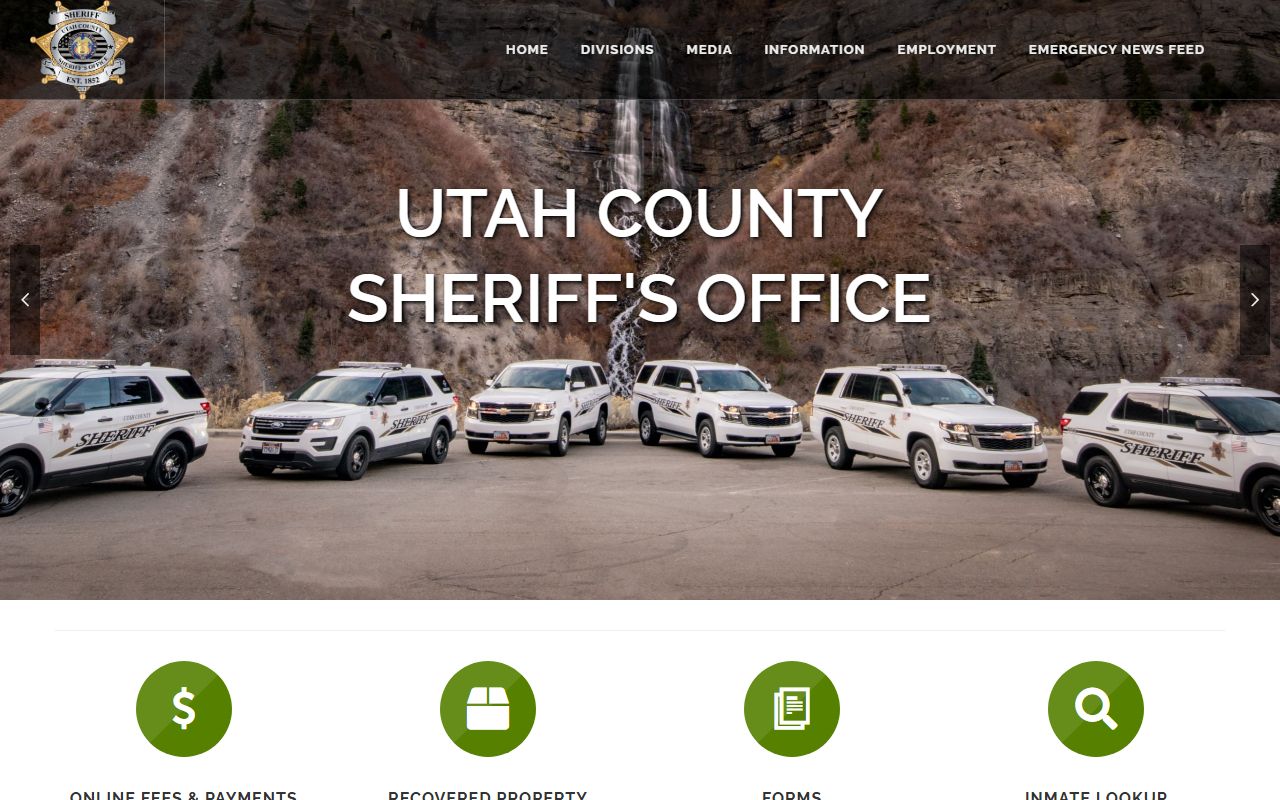
The sheriff office home page is the public face of the Utah County inmate population system. It keeps the search tools tied to the right county office.
Utah County Search Rules
The inmate search page at sheriff.utahcounty.gov/corrections/inmateSearch is built for current and recent inmate population checks. Utah County says you can search by name in the format ADAMS, B, and you can also search by arrest date. That format matters because the system is not trying to guess what you meant. It wants a clean last name, a first initial, or a date range that keeps the result tight. If you use the right format, you get to the right record fast.
The county also says the search covers current inmates plus past and present records within the last two years. That is broad enough for many family, legal, and follow-up questions. It also helps when you are trying to see whether a person was in custody before and whether the old case is still visible in the Utah County inmate population system. Booking information stays on the site for one year, which gives the public a longer look at recent custody history.
Status codes on the search page include A, C, O, and USP. Charge types use the codes CG, SU, CM, and WA. Those short labels can be hard to read at first, but they help the county keep the page compact. If you do not know what a code means, use the jail info line and ask for the plain language version. That is often the quickest way to turn a code into something useful.
Utah County's search tools work best when you do not rush the lookup. Start with the correct name format, then check arrest date, then use the county phone line if the result still looks thin. That is usually enough to sort out the right inmate population record.
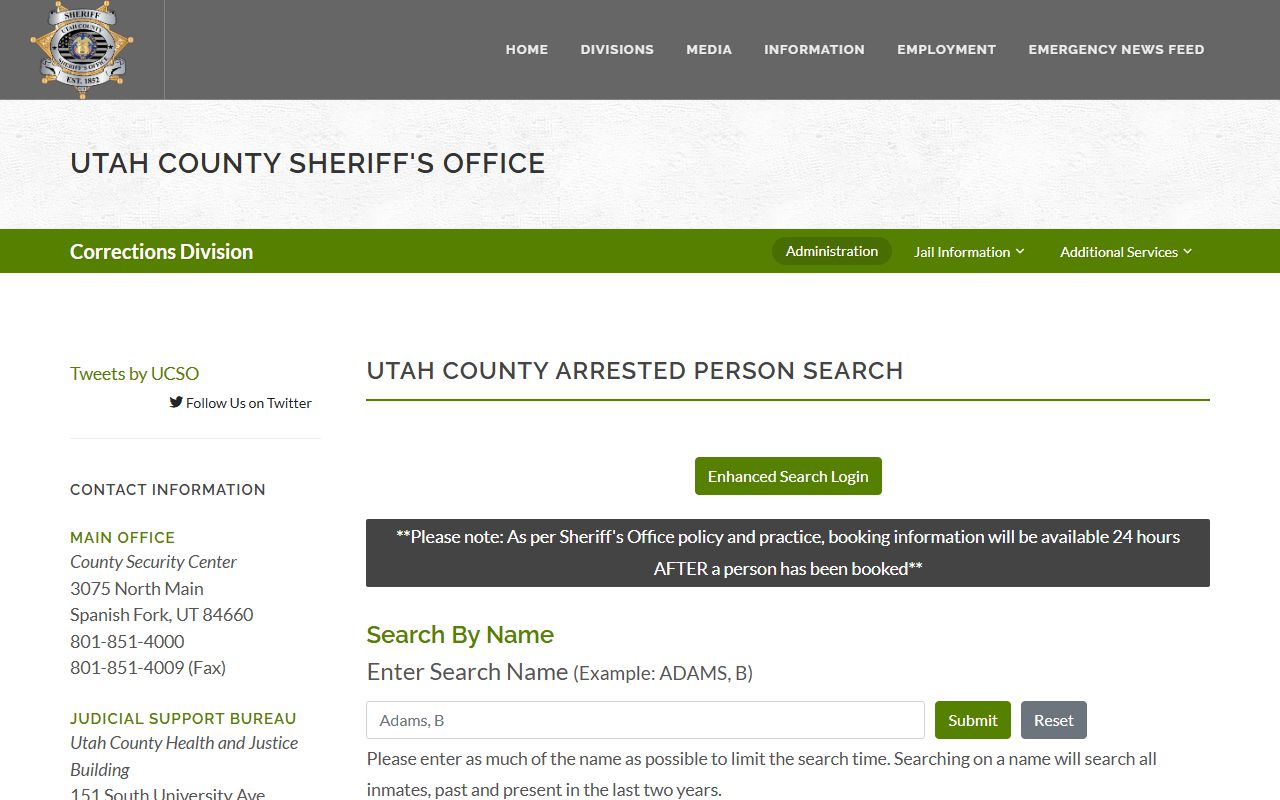
The inmate search page is the main public tool for Utah County inmate population records. It is the best page when you need the booking record itself.
Utah County Booking Timing
Utah County does not publish every booking at once. Booking information appears about 24 hours after the arrest. That delay can be the difference between no result and a full record. If you are checking a recent booking, wait long enough for the system to catch up before you assume the person is not in custody. The county is clear about this timing, and it helps keep the search useable for the public.
Photos remain visible for 30 days under HB 228. That is a narrow but useful public window, especially if you are trying to confirm identity in a fresh case. After that, the photo may no longer display even if the booking record still exists. Booking data itself remains visible longer, so you can still track the Utah County inmate population without the mugshot. That split is important. It means the photo and the booking record do not always age out at the same time.
When a person is very new to the jail, the 24-hour gap is normal. When the record is older, the 30-day photo window and the one-year booking view become the main limits. Those rules make the county system predictable, which is useful when you are trying to work through a timeline. A short delay is not an error. It is the county's public posting cycle.
For a fresh arrest, the jail info line at 801-851-4200 may answer sooner than the site. For a later search, the online page is usually enough. That is the balance Utah County tries to strike with its inmate population page.
Utah County Corrections Division
The corrections division page at sheriff.utahcounty.gov/corrections is more than a stub. It tells you where the jail sits, points to the inmate search, and connects the public to the county's broader jail work. The jail is in Spanish Fork, which matters for anyone driving in from Provo, Orem, or other parts of the county. If you need to visit, mail, or follow up on a booking, the location at 3075 North Main gives you the real county address to use.
Utah County also uses corrections programs for education, treatment, and re-entry. That tells you the jail is not only a hold site. It is also a place where the county works on release planning and support. Inmate population records do not show the full picture of those programs, but the county corrections page makes clear that the jail is connected to more than booking and housing. That is useful context when someone is held for more than a short stay.
The county site at utahcounty.gov is another good starting point when you want the broader office structure. It anchors the corrections division to the county government itself. If one page does not answer the question, the county site usually gives you the next step.
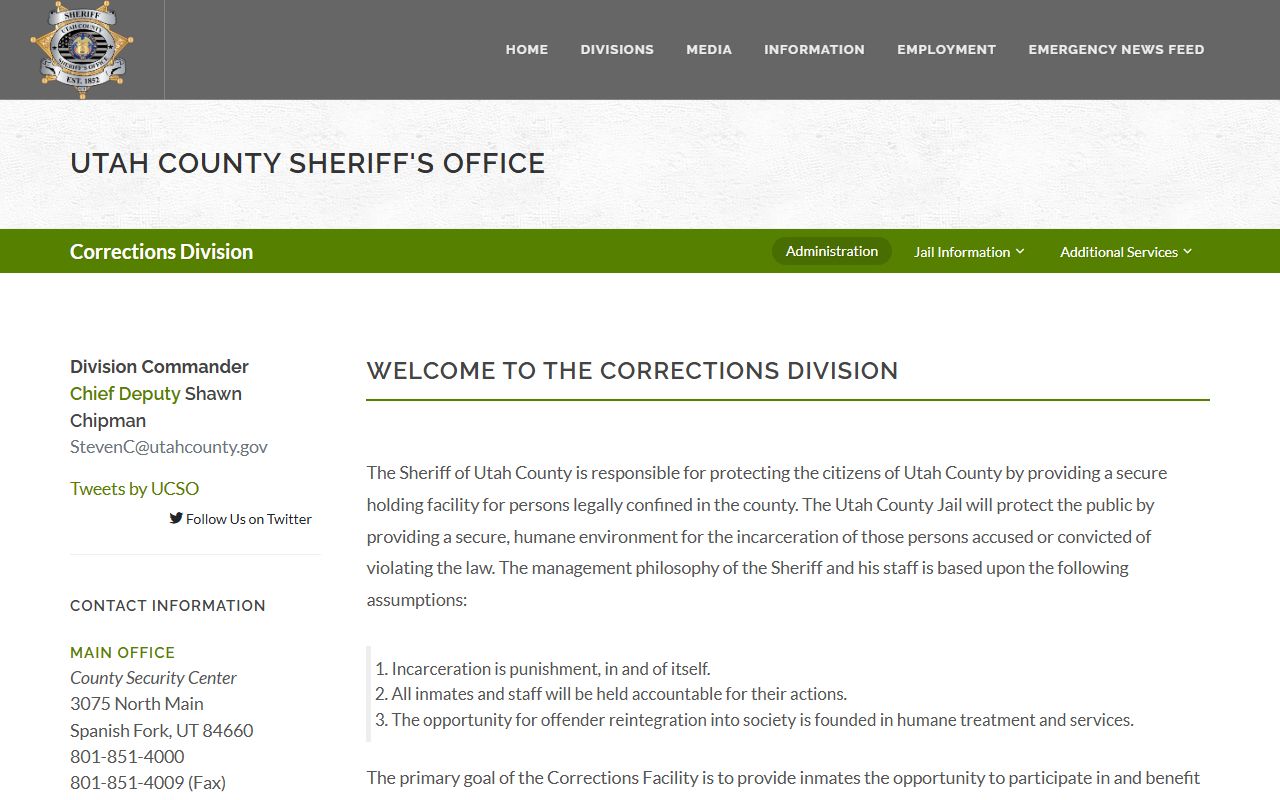
The corrections division page shows the county's jail role and gives the public a direct path back to the inmate population search tools.
Utah County Search Tips
Search the county page with the full last name when you can. The ADAMS, B format is a clue that Utah County likes clean input. If you only have a first name, add the arrest date. If you have a booking date, use that too. Small details make the record easier to find and cut down on false matches. The Utah County inmate population page is useful, but it works best when the search is tight.
It also helps to know whether you are looking for a current inmate or a past one. The county keeps both current and recent records for a two-year span, so a name may still appear after release. That can be helpful or confusing, depending on what you need. When a person has a common name, the arrest date is often the fastest way to separate one record from another. If the result still looks unclear, call the jail line and ask for help with the lookup.
Note: Utah County posts booking data and photos on different clocks, so a new arrest may show without a photo or may not show at all for about a day.
Nearby County Links
Utah County sits south of Salt Lake County and west of many large Wasatch Front traffic routes. If you need to check whether a booking landed in another county, these nearby pages are the next logical place to look.
That short list keeps the search focused on the counties most likely to matter if a person moved, was booked near a border, or came through a regional hold system.